The growth of generative AI in the last two years has been fast. ChatGPT made it popular to talk to an AI like a helpful coworker. Now, many companies have released new AI models. They promise bigger memory, understanding of images and sounds, and more accuracy. With so many options, how do you know which ChatGPT alternative is best for you?
This guide will help you compare the best ChatGPT alternatives available as of August 2026. We cover free and paid AI assistants and apps like ChatGPT, including Anthropic’s Claude, Google Gemini, DeepSeek, Perplexity, and xAI’s Grok. The comparison uses official product documentation and pricing pages where available.
I will explain what each tool is good at and where it falls short. If you are looking for a free ChatGPT alternative, an AI like ChatGPT for coding, or apps similar to ChatGPT for free, the comparison tables and recommendations below will help you narrow the options quickly.
ChatGPT became the most common AI chatbot after its launch in late 2022. OpenAI’s models are used for many tasks. People use them for writing, coding, research, and creative work. OpenAI has continued to improve its products. In 2024, it released GPT-4o, a model that can see and speak.
Later, it introduced GPT-5 with a 400k-token context window and better thinking skills. Sam Altman from OpenAI called GPT-5 “the smartest model we’ve ever done.” But he focused more on its utility and accessibility. He hinted that raw intelligence might not be its most impressive feature.
GPT-5 is the smartest model we've ever done, but the main thing we pushed for is real-world utility and mass accessibility/affordability.
— Sam Altman (@sama) August 7, 2025
we can release much, much smarter models, and we will, but this is something a billion+ people will benefit from.
(most of the world has…
Although Many users say ChatGPT has become less critical and more agreeable, as this Reddit post points out.
Is ChatGPT feeling like too much of a ‘yes man’ to anyone else lately?
by u/Weekly_Frosting_5868 in ArtificialInteligence
The pricing for ChatGPT now includes Free, Go, Plus, and Pro options. In the US, ChatGPT Go starts at $8 a month, Plus remains $20 a month, and Pro remains $200 a month. OpenAI has also moved ChatGPT to the GPT-5.6 generation: Free users get broad access to GPT-5.6 Luna, while Plus and Pro users receive higher limits and access to GPT-5.6 Sol. Business and Enterprise plans add organization and security controls.
The AI market has changed significantly again in 2026. Claude Sonnet 5 is now a major option for coding and agents, Google has moved to its Gemini 3.x generation, DeepSeek has released V4 Flash and V4 Pro, and xAI now offers Grok 4.6. This is why older 2025 model comparisons can become outdated quickly.
DeepSeek remains attractive for low-cost long-context reasoning, while Perplexity is still one of the strongest ChatGPT alternatives for web research and citations. Grok combines real-time web and X search with voice, files, connectors, and multimodal generation. The competition is stronger than ever.
The model versions, pricing, and availability in this article were refreshed in August 2026. The AI market changes quickly, so always check the official provider page before purchasing a plan or building around a specific model.

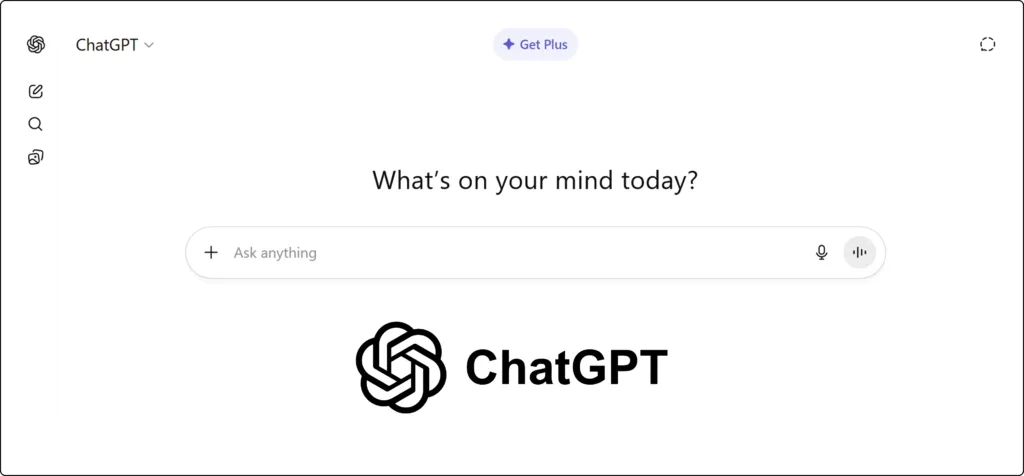
ChatGPT is an AI assistant from OpenAI. This is the company that created GPT-3 and GPT-4. It became famous in 2023 for its ability to answer questions in a natural way. It can also write code, create summaries, write blog posts, and connect with other tools.
In 2024, OpenAI launched the GPT Store and expanded multimodal features such as voice, images, and file analysis. The model lineup continued changing through 2025 and 2026. As of August 2026, ChatGPT uses the GPT-5.6 family, with GPT-5.6 Luna available broadly and GPT-5.6 Sol positioned for higher-capability use.
ChatGPT is still a great choice for many general tasks. It works with thousands of apps and supports custom assistants. It has a voice mode, web browsing, and can analyze documents. But some users look for other options for a few reasons:
ChatGPT is excellent for general writing, creative ideas, and quick prototypes. Its current experience combines voice, image generation, web search, file analysis, and custom GPTs in one interface. The GPT Store also provides specialized assistants for many workflows.
The “Advanced Data Analysis” feature can run Python code and work with spreadsheets and charts. The Business and Enterprise plans connect with Google Drive, Microsoft 365, GitHub, and Notion. This makes it simple to use company documents in your chats.
Even with GPT-5, ChatGPT has some downsides. The model sometimes says no to valid requests because of its strict safety rules. Its reasoning can sometimes fail with very long documents. Its search feature is also limited.
OpenAI API pricing varies by model and changes as new generations are released. Users who prioritize the lowest API cost, a different model style, or self-hosted/open-model deployment should compare alternatives before committing.
| Aspect | Details |
|---|---|
| Latest models | GPT-5.6 Sol and GPT-5.6 Luna; additional model availability varies by plan and rollout. |
| Context window | Context and usage limits vary by current model, plan, and product surface; check the model picker or API documentation for exact limits. |
| Multimodality | Text, images, voice, files, image generation, and web-connected features are available across ChatGPT plans with different limits. |
| Tool use & API | GPT Store; Code Interpreter; PDF analysis; connectors for Google Drive, Slack, GitHub; function calling. |
| Browsing/RAG | Built-in web search and Deep Research are available; connector and retrieval features vary by plan. |
| Pricing (consumer) | Free; Go from $8/mo in the US; Plus $20/mo; Pro $200/mo; Business and Enterprise options available. |
| Privacy & compliance | Business/Enterprise excludes data from training, offers SAML SSO, data retention controls and regional hosting. |
| Best for | General writing, brainstorming, tutoring, coding, creative tasks. |
| Limitations | High price jump to Pro; fixed safety style; limited retrieval; smaller context than some rivals. |
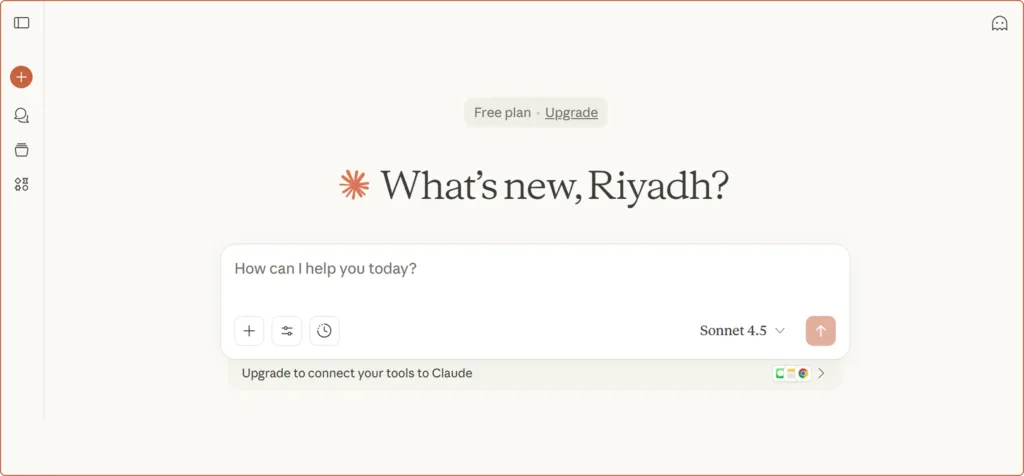
Anthropic is an AI research company started by former OpenAI employees. Its main product is Claude, an AI assistant built around its constitutional AI approach. Claude has advanced quickly since the Claude 3 and Claude 4 generations. As of August 2026, Claude Sonnet 5 is a current high-performance model for coding and agents, alongside newer Opus options and Haiku 4.5.
Anthropic has personal, team, enterprise, and API plans:
| Aspect | Details |
|---|---|
| Latest models | Sonnet 5; current Opus models; Haiku 4.5. |
| Context window | Standard 200k; Enterprise 500k; Sonnet 4/4.5 beta 1M. |
| Multimodality | Text + image (upload/analysis). |
| Tool use / API | Role-based controls, SSO, audit logs, and compliance API. |
| Browsing / RAG | Built-in web search; deeper research for Pro/Max; document cataloging. |
| Pricing (consumer) | Free; Pro $17–20/mo; Max $100+/mo; Team from $25/user/mo; Enterprise custom. |
| Privacy & compliance | Developers, researchers, and enterprises needing long context and agentic code. |
| Ideal users | Developers, researchers, and enterprises need long context and agentic code. |
| Notable limitations | High cost for long context; limited multimodality; US-first rollouts. |

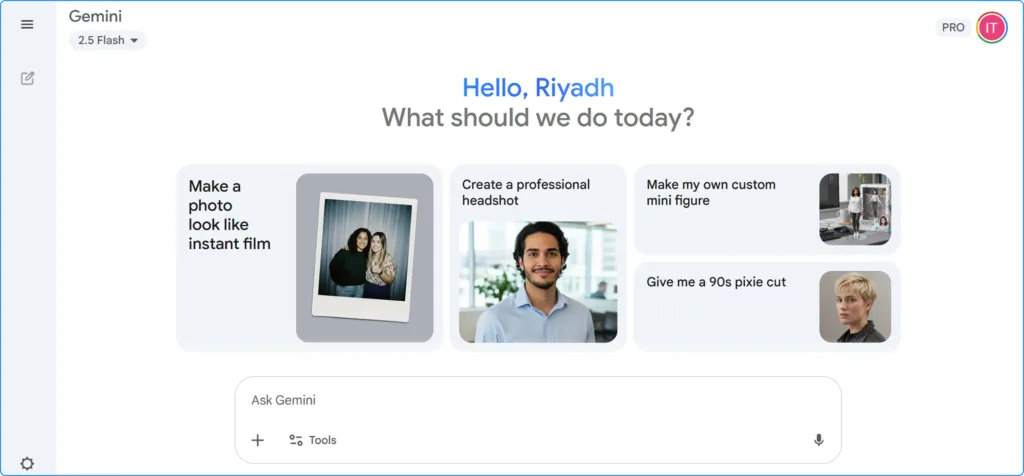
Google DeepMind develops the models behind Gemini. The lineup has moved well beyond Gemini 2.5: Google introduced the Gemini 3.5 family in May 2026 and released Gemini 3.7 Flash in August 2026 for coding, agents, and general knowledge work. Gemini remains strongly multimodal across text, images, audio, video, and code, with access through the Gemini app, Google AI Studio, and Vertex AI.
Consumer subscriptions:
💡Pro Tips: You can easily connect Google Gemini with your WordPress site by using Bit Flows!
| Aspect | Details |
|---|---|
| Latest models | Gemini 3.7 Flash; Gemini 3.6 Flash; Gemini 3.5 family and other current Gemini models. |
| Context window | 1M tokens (Pro and Flash). |
| Multimodality | Researchers, educators, and enterprises need multimodal long-context analysis. |
| Tool use / API | Workspace integration (Docs, Sheets); NotebookLM; tool calling via Vertex AI. |
| Browsing / RAG | Researchers, educators, and enterprises needing multimodal long-context analysis. |
| Pricing | Consumer: Free; AI Plus ($6/mo); AI Pro ($25/mo); AI Ultra (~$300/mo); API: $1.25/M input / $10/M output for 2.5 Pro. |
| Privacy & compliance | Google’s enterprise controls via Vertex AI; compliance certifications vary. |
| Ideal users | Availability is limited by region and currency; retrieval is not built in; high-end plans are are expensive. |
| Notable limitations | Availability is limited by region and currency; retrieval is not built in; high-end plans are expensive. |
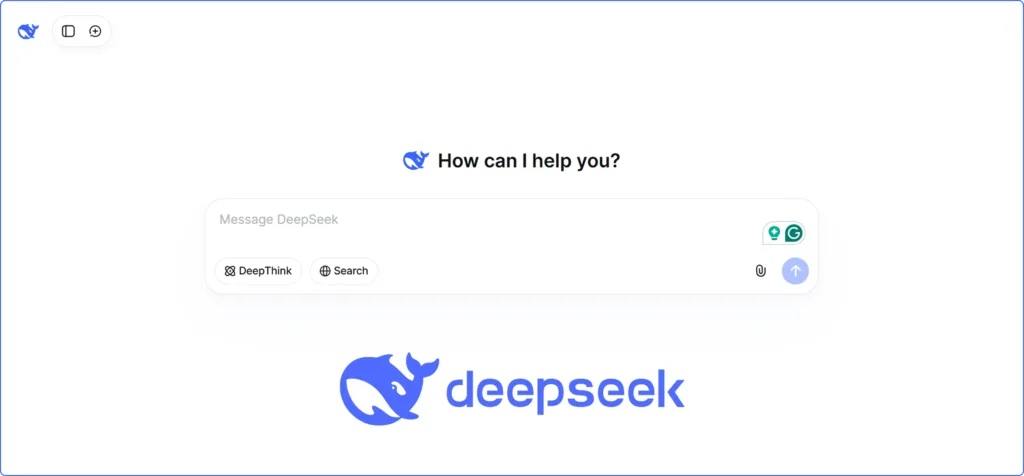
DeepSeek is a Chinese AI company known for low-cost reasoning and developer models. Its lineup has moved beyond the V3 generation. As of August 2026, DeepSeek V4 Flash and V4 Pro are the current API models, and V4 Pro is also available in the app and web experience through Expert Mode.
Consumer app: Free with no ads or in-app purchases.
API:
| Aspect | Details |
|---|---|
| Latest models | DeepSeek V4 Flash and DeepSeek V4 Pro. |
| Context window | 1M tokens. |
| Multimodality | None (text only); file upload for text extraction in the app. |
| Tool use / API | Function calling; chain-of-thought reasoning; Anthropic API format support. |
| Browsing / RAG | Deep-Think search mode in the app; API does not include built-in retrieval. |
| Pricing | App access available; API uses current peak/off-peak pricing for V4 Flash and V4 Pro. |
| Ideal users | Researchers and developers needing transparent reasoning and long context at low cost. |
| Notable limitations | No multimodality; limited ecosystem; privacy concerns for some users. |
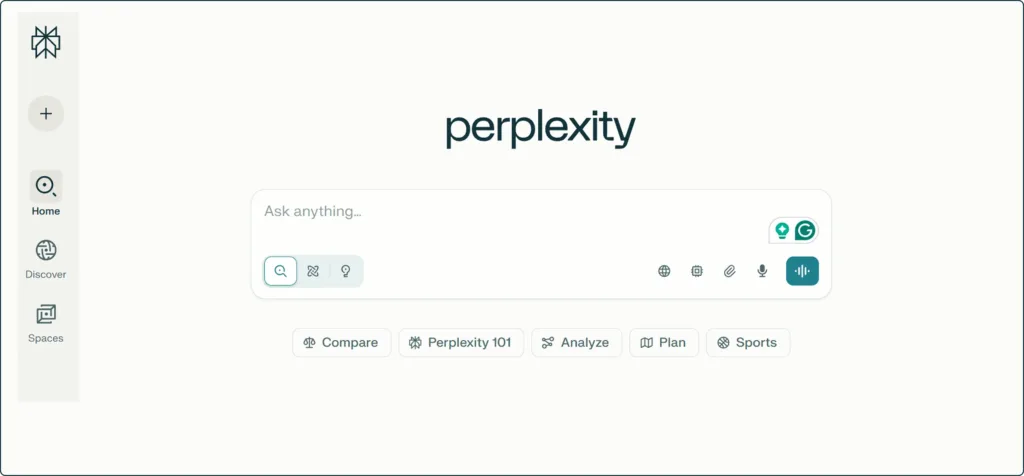
Perplexity AI calls itself a “search-focused” assistant. Its Sonar models are built around a technique that combines language models with live web search. Perplexity offers consumer subscriptions (Free, Pro, Max, Enterprise) and an API for developers.
| Aspect | Details |
|---|---|
| Latest models | Sonar; Sonar Pro; Sonar Reasoning Pro; Sonar Deep Research. |
| Context window | 128k for Sonar/Reasoning Pro; up to 200k for Sonar Pro. |
| Multimodality | Supports file uploads (PDF, CSV, audio, video, images) for analysis. |
| Tool use / API | Retrieval-augmented generation with citations; Labs for spreadsheets & dashboards. |
| Browsing / RAG | Journalists, students, and analysts needing citations and deep research. |
| Pricing | Free; Pro ~$20/mo; Max ~$200/mo; API: $1/M input/output for Sonar; $2/M input + $8/M output for Reasoning Pro; extra charges for Deep Research. |
| Ideal users | Journalists, students, and analysts need citations and deep research. |
| Notable limitations | 128k context; costs for reasoning/citation tokens; privacy concerns. |
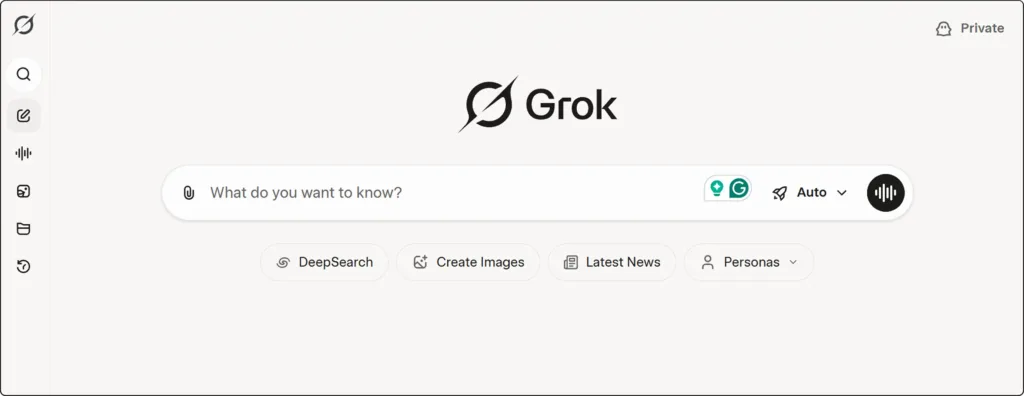
Grok is the AI assistant from xAI. It began inside X and is now also available through Grok’s web and mobile apps. As of August 2026, Grok 4.6 is xAI’s current flagship assistant model, with real-time web and X search, voice, file analysis, connectors, and image/video generation across supported plans.
Elon Musk recently shared a post on X. He praised the impressive abilities of Grok 4. According to him, it’s the first AI he’s come across that can handle tough, real-world engineering problems.
Grok 4 is the first time, in my experience, that an AI has been able to solve difficult, real-world engineering questions where the answers cannot be found anywhere on the Internet or in books.
— Elon Musk (@elonmusk) July 10, 2025
And it will get much better.
API:
Consumer subscriptions:
| Aspect | Details |
|---|---|
| Latest models | Grok 4.6 and other current Grok models for coding and agentic workloads. |
| Context window | 500k for Grok 4.6; other Grok models vary. |
| Multimodality | Text, voice, files, image generation, and video generation are available across supported Grok plans and products. |
| Tool use / API | Function calling, structured outputs, connectors, and coding/agentic model options. |
| Browsing / RAG | Real-time web and X search; limits vary by plan or API configuration. |
| Pricing (consumer) | Free; SuperGrok $30/mo; SuperGrok Plus $100/mo; other business and higher-usage plans available. |
| API pricing | Grok 4.6 starts at $2/M input and $6/M output for shorter contexts; long-context pricing is higher. |
| Ideal users | Power users needing huge context, fans of X, projects requiring long-form summarisation. |
| Notable limitations | Edgy content may offend; limited integrations; privacy concerns. |
Top picks: ChatGPT Plus or Perplexity Pro
ChatGPT Plus ($20/mo) remains a strong all-purpose choice for writing, creative work, files, and research. If you want a free AI like ChatGPT, start by testing the free tiers of Gemini, Claude, Perplexity, DeepSeek, or Grok before paying. Perplexity is especially useful when citations matter.
Top picks: Perplexity Max and Gemini AI Pro
Perplexity Max gives unlimited access to Labs and deep research, which helps create content strategies and spreadsheets with sources. Gemini AI Pro works with Google Docs and Sheets, making it easy to create articles and images within your content workflow. For visual content, the DepositPhotos AI Assistant streamlines the process by using conversational search to curate licensed stock assets, generate custom images, and edit visuals directly in one continuous flow. ChatGPT Pro is an option, but the $200 price may be too high unless you need its large context.
Top picks: Claude Sonnet 5 and current Grok coding models
Claude Sonnet 5 is a strong choice for coding and agentic development, especially with Claude Code and tool use. Grok also offers coding-focused models, but developers should compare current pricing, context, and workflow features because xAI’s model lineup changes quickly.
Top picks: Perplexity Pro and Gemini Free or AI Plus
Perplexity Pro’s citations and deep research mode are excellent for academic papers. Gemini’s free plan includes a deep search and can summarize lectures. The AI Plus plan (~$6/mo) adds more features for NotebookLM and video creation. ChatGPT’s free version is a good backup, but it’s not as good with citations.
Top picks: ChatGPT Business and Claude Team
ChatGPT Business ($25 per user/mo) offers unlimited GPT-5, connects to Slack and Zendesk, and has admin tools for teams. Claude Team (starts at $25/user/mo) has a long context and can learn from your company’s documents. Both have security features; the choice depends on which safety style your company prefers.
Top picks: Gemini AI Pro and Perplexity Max
Gemini’s connection with Google Sheets and NotebookLM helps analyze product data and build dashboards. Perplexity Max can turn a requirements document into a market analysis with sources and spreadsheets. ChatGPT Pro with Advanced Data Analysis is another choice if you like using Python notebooks.
Top picks: ChatGPT Enterprise and Claude Enterprise
ChatGPT Enterprise has features like SSO, data isolation, and SOC 2 compliance. Claude Enterprise adds role-based access, audit logs, and a compliance API. Both offer large context windows. Your choice will depend on your company’s security needs and model preferences.
Top picks: ChatGPT Plus and DeepSeek App
For common business tasks like writing emails or marketing text, ChatGPT Plus offers good quality for a fair price. If your budget is low, DeepSeek’s free app provides long context and clear reasoning. Perplexity’s free plan is also useful for quick fact-checking with sources.
Top picks: Claude API and Grok API
Claude’s API can call functions and automate tasks. Sonnet 4.5 can create and edit files. Grok’s API supports function calling and multiple models for agentic or coding workloads, but current prices vary by model and context size. You can use these to automate reports or code reviews. Think about the personality and privacy of Grok before choosing it.
The wide range of AI assistants in 2026 means there is no single “best” alternative to ChatGPT. There are many great choices for different needs. ChatGPT is still the most flexible tool for general use. It has a large ecosystem and advanced multimodal features. However, its high-tier price and fixed safety style lead some people to look for other options.
Claude is excellent for coding and reasoning with long documents, but big prompts can be costly. Gemini offers amazing multimodal abilities with a 1-million-token context and strong Google integration. DeepSeek gives clear, step-by-step reasoning and a free app. Perplexity is best for research and citations. Grok pushes the limits of context length and real-time search but has an edgier tone.
When you choose your AI assistant, think about what you do most often. Consider how important sources or multimodal features are to you. Think about your budget, compliance needs, and tolerance for a certain style.
You can use our recommendations and tables as a guide. But you should also try out several tools yourself. Many have free plans or trials. The AI field will keep changing fast. The best way to benefit from AI is to stay curious and informed.
Accuracy depends on the task. Claude Sonnet 5 is a strong choice for coding and agentic work, current Gemini 3.x models are strong for multimodal tasks, and Perplexity remains especially useful for research with citations. Test several tools with your own prompts before choosing.
Claude Sonnet 5 is one of the strongest ChatGPT alternatives for coding because Claude Code and tool use support real development workflows. ChatGPT and current Grok coding models are also worth testing, depending on your IDE, budget, and agent requirements.
Perplexity’s free plan gives real-time search with sources in every answer. DeepSeek’s app is also free and has a Deep-Think search mode, but it does not list its sources.
Context windows now vary significantly by model. DeepSeek V4 supports up to 1 million tokens, some current Gemini and Grok models also offer very large contexts, and Claude and ChatGPT limits depend on the specific model and product surface. Check current model documentation before deciding based on context alone.
None of the tools discussed here is fully self-hosted. Claude and ChatGPT state they do not use your data for training in their Business/Enterprise plans. Perplexity claims not to train on user questions. For self-hosting, you would need to look at open-source models like Mistral or Llama, which are not covered in this article.
No. Each alternative has its own good and bad points. Some are best for citations (Perplexity), others for coding (Claude), multimodality (Gemini), or context length (Grok). You should choose based on what you need to do, not look for a perfect copy.
ChatGPT Business/Enterprise and Claude Enterprise have the best compliance features. They offer SOC 2/ISO certifications, SSO, audit logs, and data isolation. Gemini’s Vertex AI also provides enterprise controls. Perplexity and Grok have fewer enterprise options.
Perplexity remains one of the strongest choices for real-time web research because citations are central to its search experience. ChatGPT, Gemini, Claude, and Grok also offer web-connected research features, but the way they search, cite, and summarize sources differs.
We have listed the main limitations in each snapshot table. Briefly: ChatGPT has high prices and limited search; Claude’s long-context use is expensive; Gemini is not available everywhere; DeepSeek has no multimodality or enterprise features; Perplexity’s deep research is costly and context is limited; Grok’s edgy tone and privacy issues can be a problem.





 EN
EN  DE
DE  ES
ES  NL
NL  IT
IT  PT
PT  JA
JA 