You have two tabs open: Claude and ChatGPT. Now you are trying to decide which one is worth paying for. The better question is not which one is best overall. It is which one fits the way you work.
This Claude vs ChatGPT comparison will not pick a winner for you. That is the wrong goal. Claude and ChatGPT are both excellent tools in 2026, but they are excellent at different things. Once you know where each one genuinely leads, the decision gets simple.
Here is what this article covers: real benchmark data, honest testing results from across the web, Reddit community feedback, a feature-by-feature breakdown, and a clear recommendation by use case.
Here is the cleanest way to think about it:
This comparison is no longer just Claude the chatbot versus ChatGPT the chatbot.
Claude now includes chat, code execution, projects, research, memory, voice mode, Artifacts, connectors, desktop extensions, Claude Code, Claude Cowork, and even beta tools for Excel and PowerPoint.
On Free, Anthropic included web search, memory, code execution, Slack, and Google Workspace connections, and remote MCP connectors. Pro adds Claude Code, Claude Cowork, Research, unlimited projects, and access to more models.
ChatGPT has expanded it further. Its current plans include search, canvas, projects, data analysis, file uploads, voice, voice with video, apps, custom GPTs, memory, deep research, agent mode, and Codex access.
Business plans add 60+ apps for tools like Slack, Google Drive, SharePoint, GitHub, and Atlassian, along with workspace controls.
So the real question is not “Which model is smarter?”
It is “Which product fits the way I work?“
| Feature | Claude (Sonnet 4.6 / Opus 4.6) | ChatGPT (GPT-5.4) |
| Best for | Coding, writing, long docs | Multimodal, research, ecosystem |
| Context window (paid) | 200K tokens (1M via API beta) | 128K tokens (1M at premium) |
| Image generation | No | Yes (DALL-E) |
| Web browsing | Yes (added 2026, limited) | Yes (deep integration) |
| Free tier | Yes | Yes (more generous) |
| Paid plan | $20/month (Pro) | $20/month (Plus) |
| Premium tier | $100–$200/month (Max) | $200/month (Pro) |
| SWE-bench (coding) | 80.8% (Opus 4.6) | 80% (GPT-5.4) |
| API pricing | $3/$15 per 1M tokens | $2.50/$15 per 1M tokens |
For pure writing, Claude still has a real edge for many users.
Its output is often tighter, calmer, and less inflated. That lines up with what many active users keep saying in Reddit threads and comparison posts. In those discussions, Claude is often described as sounding more human and more concise, while ChatGPT is seen as more feature-rich around the writing itself.
Chatgpt 5.4 vs claude opus 4.6
by u/Historical-Bet-9134 in ClaudeAI
That does not mean ChatGPT is weak. Far from it. ChatGPT is better when the writing task sits inside a bigger workflow. You can pair writing with deep research, apps, files, custom GPTs, canvas, data analysis, and voice input in one product. For people doing mixed content work, that wider surface often saves time even if Claude’s first draft sounds a bit cleaner.
Best pick for writing:
This is where the answer gets more interesting. One benchmark you will see often is SWE-bench. It checks whether an AI model can solve real software engineering problems.
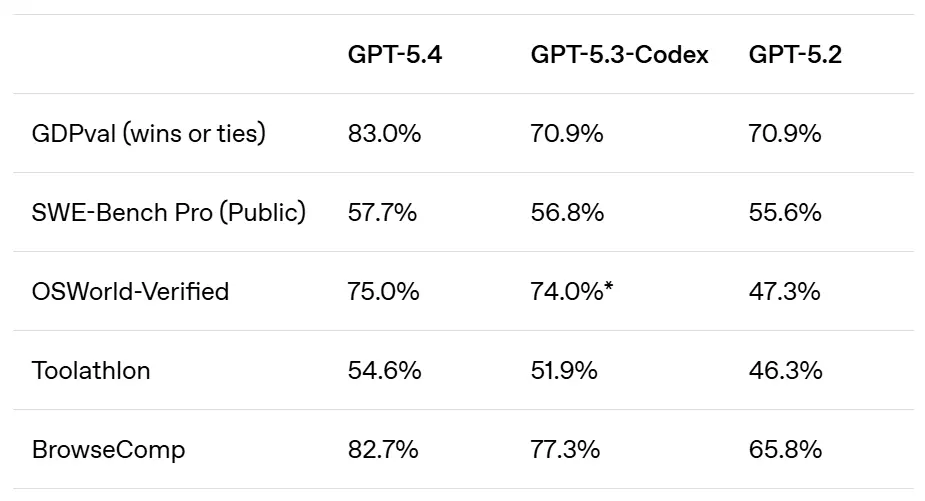
OpenAI shows GPT-5.4 ahead of earlier GPT models on coding, tool use, and computer-use tasks, and says it folds GPT-5.3-Codex strengths into a broader professional-work model.
Anthropic, on the other hand, reports Claude Sonnet 4.6 at 79.6% on SWE-bench Verified, while Claude Opus 4.6 reached 80.8%. That gives Claude a strong case for deep technical work.
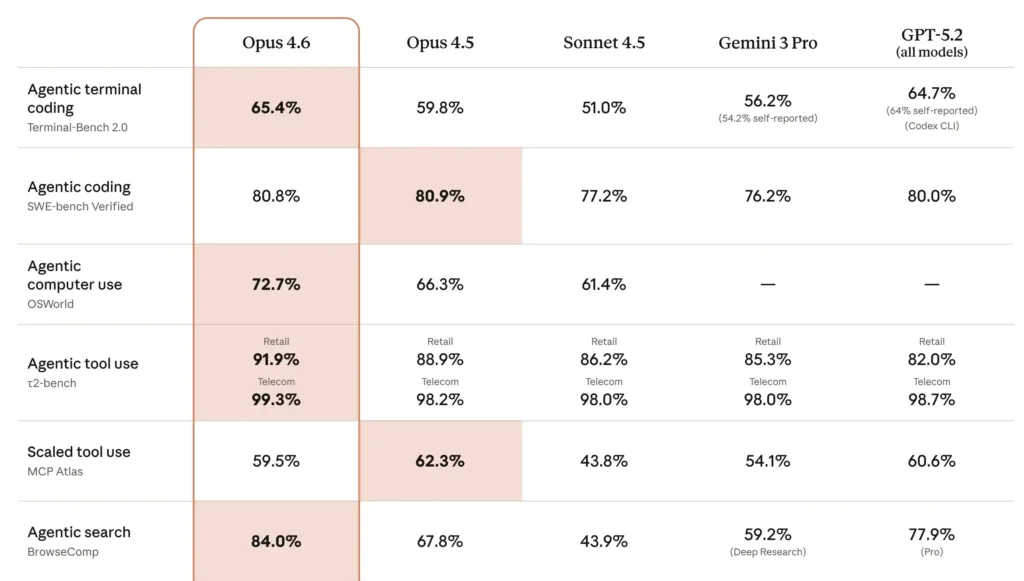
Note: A higher score means the model solved more real coding tasks correctly.
Current community feedback is still toward Claude for deep codebase work. Reddit users who have tested both often say Claude feels stronger for refactors, large repositories, and long technical sessions. Claude is preferred for building. ChatGPT is praised for its review and agent-style execution.
Best pick for coding:
ChatGPT has a wider research product right now.
ChatGPT paid plans include expanded deep research and agent mode, while Business adds 60+ apps that pull in company tools and data. That makes ChatGPT better for users who want research to turn into action inside one workspace.
Claude is not weak here. Claude Pro includes Research, and the Enterprise page emphasizes multi-step research across internal data and the web, plus connectors and Artifacts. Claude also offers web search, memory, and strong long-context handling. So Claude can absolutely do serious research work. It just feels more focused on the reasoning experience than on a giant product ecosystem.
Best pick for research:
Claude still feels stronger for long document work.
Anthropic Sonnet 4.6’s 1M token beta context, long-horizon planning, and strong performance on document-heavy work. Also, Sonnet 4.6 matches Opus 4.6 on OfficeQA in a Databricks customer quote, which is a strong signal for enterprise document reasoning.
OpenAI also has a massive context story now. GPT-5.4 supports up to 1M tokens in Codex and the API, and the API docs list a 1,050,000-token context window. But in the ChatGPT app, OpenAI notes that GPT-5.4 Thinking context windows remain unchanged from GPT-5.2 Thinking, so the headline API number should not be confused with what every ChatGPT user gets in practice.
For actual user value, I would still give this category to Claude.
This is a clearer ChatGPT win.
Claude’s support voice mode, image analysis, desktop extensions, Artifacts, and file creation with code execution. That is solid.
ChatGPT goes wider. Its current plan includes voice, voice with video, apps, canvas, data analysis, file uploads, and faster image creation on paid tiers.
If you want one assistant that can switch between talking, researching, generating images, handling files, and using apps, ChatGPT currently feels more complete.
Best pick for multimodal work: ChatGPT
ChatGPT wins on breadth. Claude wins on openness.
Claude’s now includes connectors, remote MCP integration, Artifacts with MCP support, Slack and Google Workspace services, Claude Code, Cowork, and browser or office extensions. That makes Claude very attractive to advanced users who want a model that can plug into tools and custom flows.
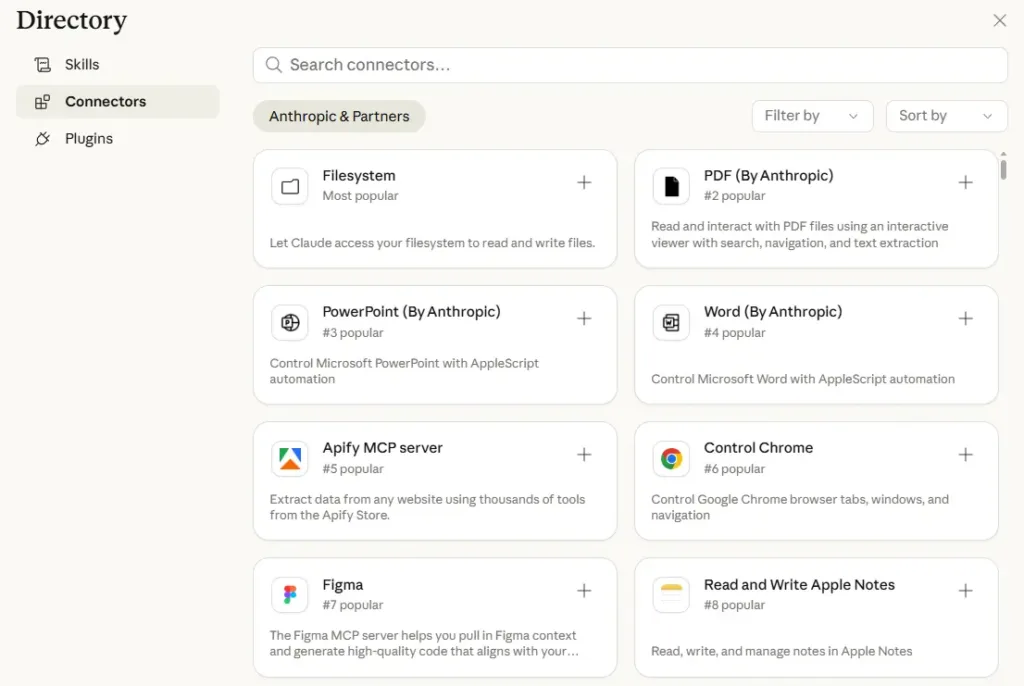
ChatGPT has a broader packaged ecosystem for mainstream users. Apps, custom GPTs, an app directory, projects, shared projects, tasks, Codex, deep research, and agent mode create a more polished all-in-one experience. Business plans make that even stronger with 60+ workplace apps.
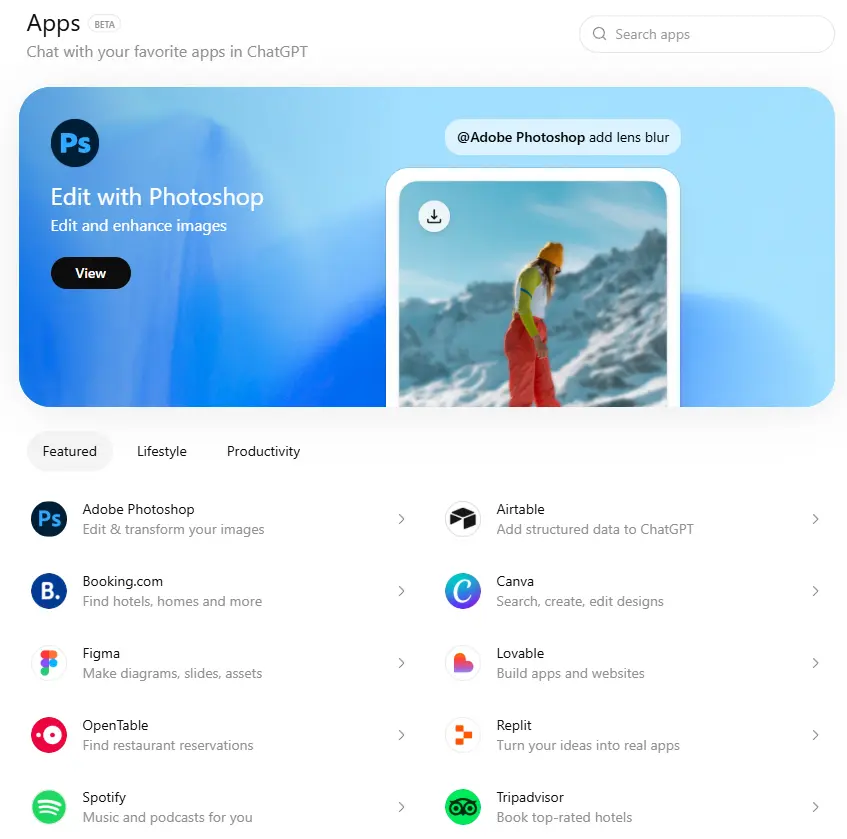
So the better value depends on how you think:
Still comparing your options? Explore our guide to the best ChatGPT alternatives to see how tools like Claude, Gemini, and others compare for different types of work.
ChatGPT’s free tier is more capable for casual use. For budget-conscious users, ChatGPT’s free tier is more generous and capable for casual use.
Claude’s free tier is still useful, but it hits rate limits faster, especially for heavy tasks. That said, Claude gives all free users access to its Artifacts feature for building interactive content.
Claude Pro and ChatGPT Plus both cost $20/month. Both give you access to frontier models with usage limits. Claude Pro includes Claude Code (a terminal coding agent) at no extra cost. ChatGPT Plus includes DALL-E image generation and web browsing.
That is a meaningful difference. If coding is your work, Claude Code, at no added cost, is a significant value. If you need images and voice, ChatGPT Plus combines those at the same price.
One noteworthy development: ChatGPT started showing ads on its Free and Go plans. The Go plan is $8/month, you are paying and still seeing ads. Plus and Pro are ad-free, but the direction has concerned some long-time subscribers.
Claude Max and ChatGPT Pro are the two most expensive AI subscriptions available in 2026. Both reach $200/month at their top tiers. Claude Max 20x multiplies your Pro usage quota by 20 and includes Claude Code. ChatGPT Pro offers unlimited access to GPT-5.4 with dedicated GPU capacity.
Claude also offers a middle step at $100/month (Max 5x) that does not exist on OpenAI’s side. That matters if you need more than Pro but not the full 20x tier.
| User type | Claude | ChatGPT |
|---|---|---|
| Solo users | Pro $20/mo | Plus $20/mo |
| Power users | Max 5x $100/mo, Max 20x $200/mo | Pro $200/mo |
| Teams | Team $25/seat monthly, $20/seat annually | Business $25/user monthly, $20/user annually |
| Developers and automation users | Sonnet API $3 input / $15 output | GPT-5.4 API $2.50 input / $15 output |
Choose Claude if you:
Choose ChatGPT if you:
Use both if you:
Picking the better assistant is only part of the decision. Many teams are not using these tools only for chat anymore. They are using them inside content, support, CRM, and site workflows. That is where automation tools become relevant.
So, the real power comes when you connect these AI models to your actual workflows.
That is where tools like Bit Flows become relevant. Bit Flows is a WordPress-native automation platform with built-in integrations for ChatGPT, Claude, Gemini, Perplexity, Deepseek, and other leading AI tools.
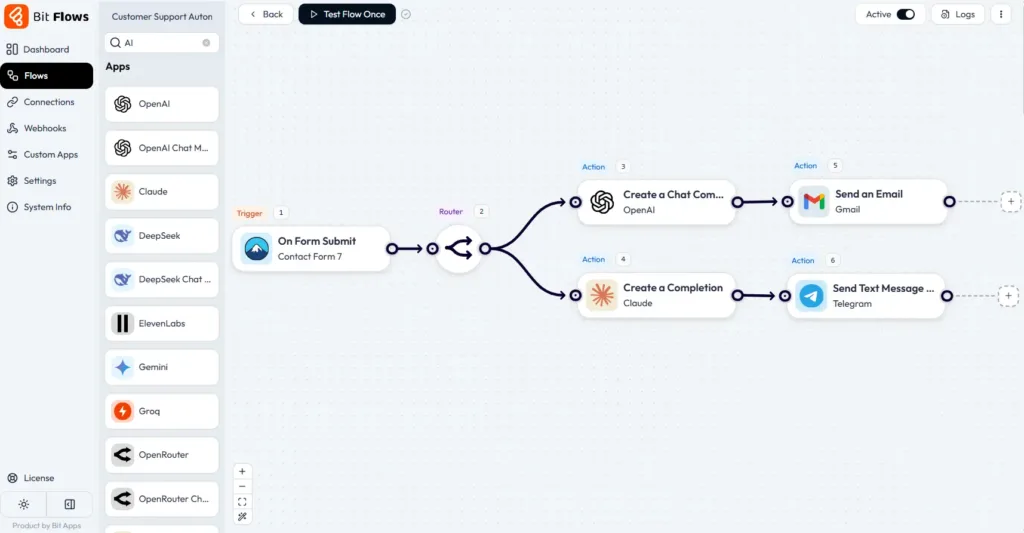
You don’t need to switch between chat windows; you can build automated pipelines that use AI agents as part of a larger workflow, pulling data from one source, running it through an AI model, and triggering an action on the other end.
Claude does not beat ChatGPT across the board. ChatGPT does not beat Claude across the board either.
In 2026, Claude delivers maximum value for deep work. That includes coding, long-context reasoning, dense document analysis, and cleaner writing.
ChatGPT delivers maximum value for broad work. That includes research, apps, voice, images, custom GPTs, business-tool integrations, and mixed daily productivity.
If you only want one answer, use this one:
Claude still has the stronger reputation for deep codebase work and long technical sessions, while ChatGPT is very strong in agentic coding, code review, and tool-heavy workflows.
Claude Pro gives better value for writing, coding, and long-document work. ChatGPT Plus gives better value for mixed work because the product surface is broader. Both are currently priced at $20/month in the US.
Usually yes. Claude’s product direction and user feedback both lean that way, especially for dense long-context reading and synthesis.
For broad research workflows, yes. Deep Research, agent mode, apps, and business-tool connections give ChatGPT a wider research stack.
If AI is central to output, many teams will get better results by using both. Claude can handle deep reasoning and code-heavy work, while ChatGPT can cover wider research and workflow orchestration. That matches both the product split and current user feedback.





 EN
EN  DE
DE  ES
ES  NL
NL  IT
IT